Give your athletes a different kind of recovery.
A low-demand experience designed to fit alongside the training and recovery work already happening.
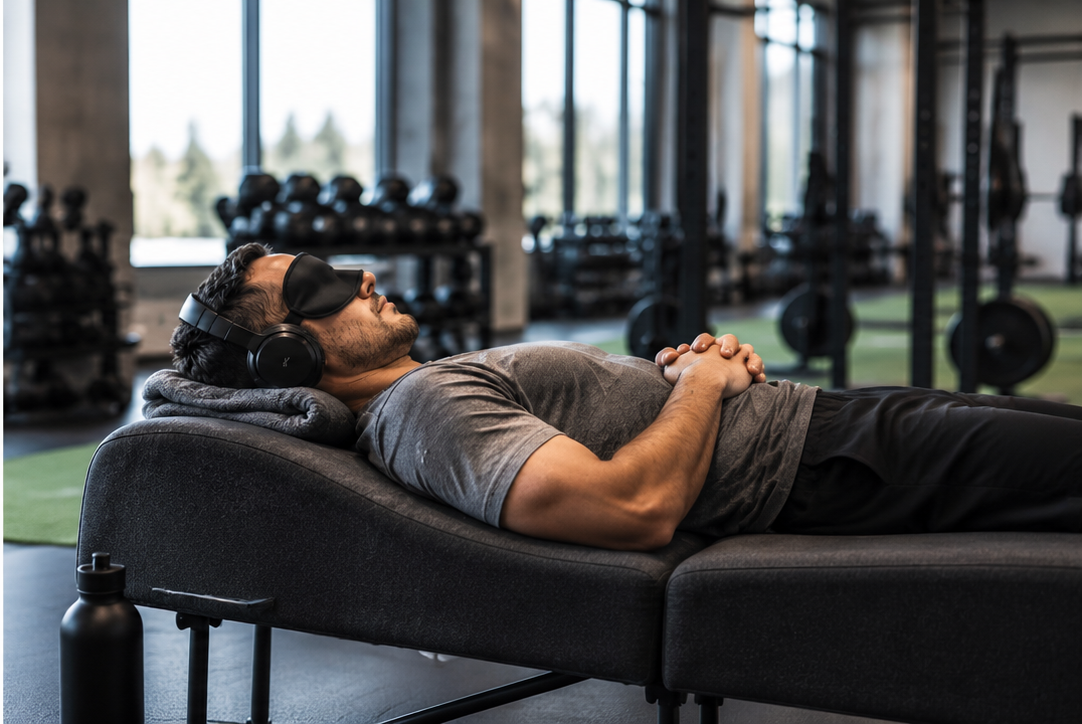
Built for the spaces between effort.
Practice can end before the body feels finished.
After practice
Strength work, conditioning, skills, or team practice.
After competition
Once the game, meet, match, race, or event is over.
Recovery days
Alongside the recovery work already in the program.
Sound you hear. Sound you feel.
The athlete lies back, puts on the headphones, and enters a guided recovery period built around sound they can hear and vibration they can physically feel.
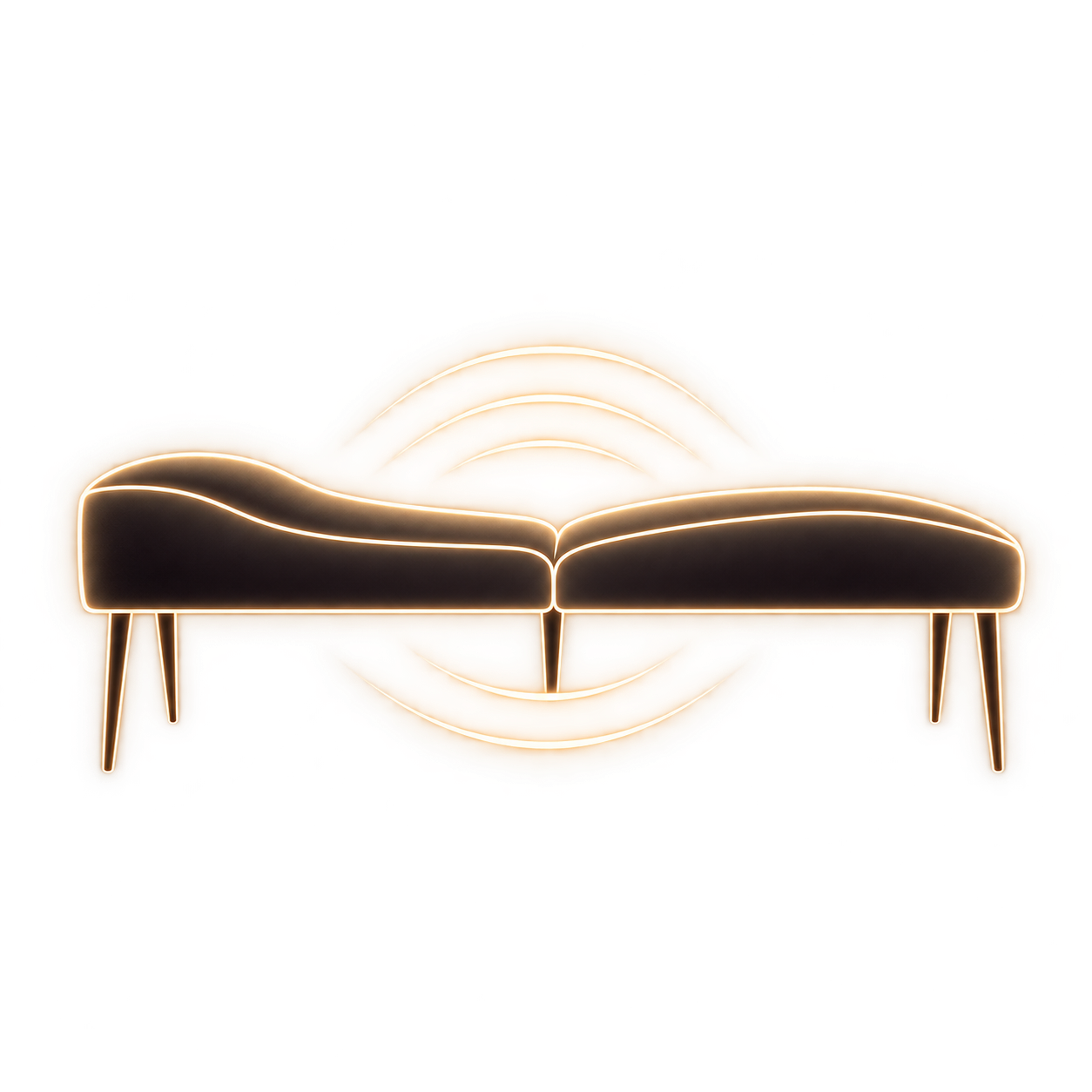
Sound you can physically feel.
Selected audio plays through headphones and through the vibroacoustic table at the same time, turning low-frequency sound into physical vibration through the body.
Less to manage.
Sound, pacing, and simple focused-awareness cues guide the experience without giving the athlete another technique to learn, score to chase, or task to perform.
Experience it before you bring it to your athletes.
Experience Still Point Performance firsthand before asking your athletes to try it.
Feel the vibroacoustic table, understand the session flow, ask practical questions, and see how the experience could fit your schedule and recovery approach.
Book a complimentary sessionRecovery includes the transition out of effort.
Training can end before physiological activation does.
Heart rate, heart-rate variability, and other autonomic measures show that the body continues moving out of an activated state after strenuous effort ends. That transition is part of recovery, even when the workout or competition is already over.
Recovery is not only physical.
Sport-psychology research treats psychological detachment and relaxation as meaningful parts of recovery after demanding effort. Still Point is designed to create a structured period away from the demands of training or competition, though the specific Still Point format has not been directly studied as a psychological-recovery intervention.
Calming vibration was associated with higher high-frequency HRV in some athletes.
In a 2022 pilot study of 22 university athletes, vibration delivered through a wearable transducer was followed by higher high-frequency HRV when athletes rated the stimulation as calming. The effect was strongest in athletes most affected by the exertion. The study did not use a vibroacoustic table or the Still Point format.
We bring the experience. You decide where it fits.
We build the session flow around your roster, available time, and recovery window.
Roster, schedule, recovery window, and what you want the experience to support.
Timing, room setup, participant flow, and the right format.
Still Point handles setup, orientation, and facilitation.
We handle teardown and leave the room ready for what comes next.
Still Point brings
- Equipment + setupEquipment, audio, and materials for the experience, plus setup and teardown.
- Participant flowOrientation, athlete guidance, and on-site facilitation.
- Scheduling supportWe help coordinate timing and session flow with your program.
You provide
- A compatible spaceA private or semi-private area suited to the experience, with standard power.
- Program coordinationA point person to help coordinate participation, timing, and team logistics.
- Normal site accessParking, facility access, and any required approvals.
Low-frequency sound and vibration can travel beyond the room, so we’ll confirm the best placement with you in advance.
Make the downshift part of recovery.
Bring Still Point into a practice day, recovery day, or team schedule and let your athletes experience it firsthand.